Robot Dog Toys Explained: Types, Features & Prices
Robot dog toys are electronic toys that mimic dog behavior through programmed movements, sounds, and interactions. They vary in complexity, features, and price.
What Are Robot Dog Toys and How Do They Work?
Robot dog toys are interactive gadgets designed to mimic the behavior and companionship of a real dog, using advanced technology to engage pets and sometimes their human owners. These toys come in various shapes and sizes, but they all share the common goal of providing entertainment, stimulation, and even exercise for pets through automated movements, sounds, and interactive features. The primary keyword, robot dog, refers to these tech-enhanced playthings that can roll, bark, wag their tails, and even respond to touch or voice commands.
How Do Robot Dog Toys Operate?
At their core, robot dog toys are powered by a combination of motors, sensors, and in some cases, artificial intelligence. Here’s a breakdown of how they typically work:
- Motors and Movement: These toys are equipped with small motors that allow them to move around. Some can walk, run, or even chase balls, simulating the behavior of a real dog.
- Sensors: Many robot dogs have built-in sensors that help them detect obstacles, respond to touch, or even recognize their owner’s voice. This allows them to interact more naturally with their environment and the people around them.
- Voice and Sound: Some models can bark, growl, or even play pre-recorded messages or music. This adds an extra layer of realism and engagement for both pets and their owners.
- Remote Control or App Control: Depending on the model, robot dogs can be controlled via a remote control or a smartphone app. This allows for more precise interactions and the ability to program specific behaviors or tricks.
- Battery Life: Most robot dogs are rechargeable, with battery life varying widely depending on the model and its features. Some can run for a few hours on a single charge, while others may last longer.
The technology behind robot dog toys has advanced significantly in recent years, making them more lifelike and capable than ever before. However, it’s important to note that these toys are not a substitute for real pets but rather a supplement to enhance playtime and provide additional stimulation.
Evidence of Effectiveness
While specific test scores and studies are not available for all models, anecdotal evidence and user reviews suggest that robot dog toys can be effective in keeping pets entertained and engaged. They are particularly useful for pets that spend long periods alone, as they can provide companionship and mental stimulation. Additionally, some models are designed to encourage physical activity, which can be beneficial for pets that need more exercise.
Safety Considerations
When considering a robot dog toy, it’s important to keep safety in mind. Here are some key points to consider:
- Age Appropriateness: Some robot dogs are designed for younger children, while others are more suitable for older kids or adults. Always check the age recommendations.
- Small Parts: Be cautious of small parts that could pose a choking hazard, especially for younger children and pets.
- Battery Safety: Ensure that the toy has a secure battery compartment to prevent accidental ingestion of batteries.
- Supervision: It’s always a good idea to supervise pets and children when they are playing with robot dog toys, particularly during the first few uses.
By understanding how robot dog toys work and what to look for, you can make an informed decision about whether one is right for your pet.
Why Should You Consider a Robot Dog Toy for Your Pet?
Robot dog toys offer a unique blend of entertainment, companionship, and stimulation that can be beneficial for both pets and their owners. Here are some reasons why you might consider adding a robot dog to your household:
Entertainment and Engagement
One of the primary benefits of robot dog toys is that they provide entertainment and engagement for pets, particularly when their owners are not at home. These toys can keep pets occupied for hours, reducing boredom and the potential for destructive behavior.
Mental Stimulation
Robot dogs can offer mental stimulation by encouraging problem-solving and interaction. For example, some models can be programmed to perform tricks or respond to voice commands, which can challenge pets and keep their minds active.
Physical Activity
Many robot dog toys are designed to encourage physical activity. For instance, some models can chase balls or move around in unpredictable patterns, prompting pets to run and play. This can be especially beneficial for pets that need more exercise.
Companionship
For pets that spend long periods alone, robot dog toys can provide a sense of companionship. The interactive features of these toys can make pets feel like they have a friend to play with, even when their owners are not around.
Training Aid
Some robot dogs can be used as a training aid. For example, they can help teach pets to respond to commands or perform specific behaviors. This can be a fun and engaging way to reinforce training and strengthen the bond between pets and their owners.
The Different Types of Robot Dog Toys: A Comprehensive Overview
Robot dog toys come in various forms, each with its own set of features and benefits. Here is a detailed comparison of the different types of robot dog toys:
| Type | Best for | Pros | Watch-outs |
|---|---|---|---|
| Basic Models | Younger children and pets | Affordable, easy to use, simple features | Limited interactivity, shorter battery life |
| Interactive Models | Older children and pets | Advanced sensors, voice recognition, app control | More expensive, complex setup |
| Programmable Models | Tech-savvy users and pets | Highly customizable, can perform tricks, teach commands | Requires more time to set up and learn |
| Realistic Models | Pet owners looking for companionship | Life-like movements, realistic sounds, responsive to touch | May be too complex for some pets, higher cost |
By understanding the different types of robot dog toys and their features, you can choose the one that best suits your needs and the needs of your pet.
Key Features to Look for in a Robot Dog Toy
When selecting a robot dog toy, there are several key features to consider:
Movement and Mobility
Look for a toy that has a range of movement options, such as walking, running, or even climbing. This will provide more entertainment and engagement for your pet.
Interactive Features
Consider toys with interactive features such as voice recognition, touch sensors, and app control. These features can enhance the toy’s ability to engage with your pet and provide a more interactive experience.
Battery Life and Charging
Check the battery life and charging options. Some toys have longer battery life than others, and some can be charged via USB, making them more convenient.
Durability
Ensure the toy is made from durable materials that can withstand rough play. This is particularly important for pets that are prone to chewing or scratching.
Age Appropriateness
Always check the age recommendations for the toy. Some models are more suitable for younger children and pets, while others are better for older children and adults.
How to Choose the Right Robot Dog Toy for Your Dog’s Age and Size
Choosing the right robot dog toy for your pet depends on several factors, including age and size:
Age Considerations
For younger pets, basic models with simple features may be more appropriate. As pets grow older, they may benefit from more advanced interactive and programmable models that offer more stimulation and challenge.
Size Considerations
Larger pets may require toys that are more robust and have a wider range of movement options. Smaller pets, on the other hand, may be better suited to smaller, more compact models.
Activity Level
Consider your pet’s activity level when choosing a robot dog toy. More active pets may benefit from toys that encourage physical activity, such as those that can chase balls or move around in unpredictable patterns.
Personality
Think about your pet’s personality and preferences. Some pets may be more attracted to toys with realistic movements and sounds, while others may prefer toys with more interactive features.
Are Robot Dog Toys Safe? Important Safety Considerations
When considering a robot dog toy for your pet, safety should be your top priority. These interactive toys can provide hours of entertainment, but it’s crucial to ensure they don’t pose any risks to your furry friend.
Age and Size Appropriateness: Always check the manufacturer’s recommended age and size guidelines. Some robot dog toys are designed for larger dogs and may have small parts that can be hazardous for smaller breeds. Similarly, toys with detachable parts or small components can pose a choking hazard for puppies and small dogs.
Battery Safety: Many robot dog toys are powered by batteries, often of the button variety. These batteries can be extremely dangerous if ingested. Ensure that the battery compartment is securely sealed and that your dog cannot access it. Look for toys with child-proof battery compartments and avoid models that seem flimsy or easy to open.
Material Quality: The materials used in the construction of the toy should be non-toxic and durable. Cheaper models may use plastics that can break easily, creating sharp edges or small pieces that can be swallowed. Opt for toys made from high-quality, pet-safe materials.
Supervision: While robot dog toys can be left with your pet, it’s advisable to supervise their playtime, especially during the initial stages. This allows you to ensure that your dog is interacting with the toy safely and that there are no immediate issues.
Maintenance: Regularly inspect the toy for wear and tear. Damaged toys can expose sharp edges or loose parts that can be dangerous. If you notice any damage, discontinue use immediately and consider repairing or replacing the toy.
Here’s a quick-reference table for safety considerations:
| Safety Aspect | What to Look For |
|---|---|
| Age and Size Appropriateness | Check manufacturer’s guidelines for your dog’s age and size |
| Battery Safety | Secure, child-proof battery compartments |
| Material Quality | Non-toxic, durable, high-quality materials |
| Supervision | Initial supervision and regular monitoring |
| Maintenance | Regular inspection for wear and tear |
Caring for Your Robot Dog Toy: Maintenance and Troubleshooting Tips
Proper care and maintenance can significantly extend the life of your robot dog toy and ensure it remains a safe and enjoyable experience for your pet.
Regular Cleaning: Just like any other toy, robot dog toys can accumulate dirt and bacteria. Regularly wipe the toy with a damp cloth and mild soap. Avoid submerging the toy in water unless it is explicitly designed to be waterproof.
Battery Care: Replace batteries as needed and remove them if the toy will not be used for an extended period. This prevents corrosion and potential damage to the toy. Always use the correct type and size of batteries as recommended by the manufacturer.
Inspect for Damage: Frequently check the toy for any signs of wear and tear, such as cracks, loose parts, or exposed wires. If you notice any damage, discontinue use and either repair the toy or replace it if necessary.
Troubleshooting Common Issues: If your robot dog toy is not functioning properly, try the following steps:
- Check the battery compartment for any signs of corrosion or loose connections.
- Ensure that the batteries are fully charged and inserted correctly.
- Consult the user manual for any specific troubleshooting tips.
- If the issue persists, contact the manufacturer for further assistance.
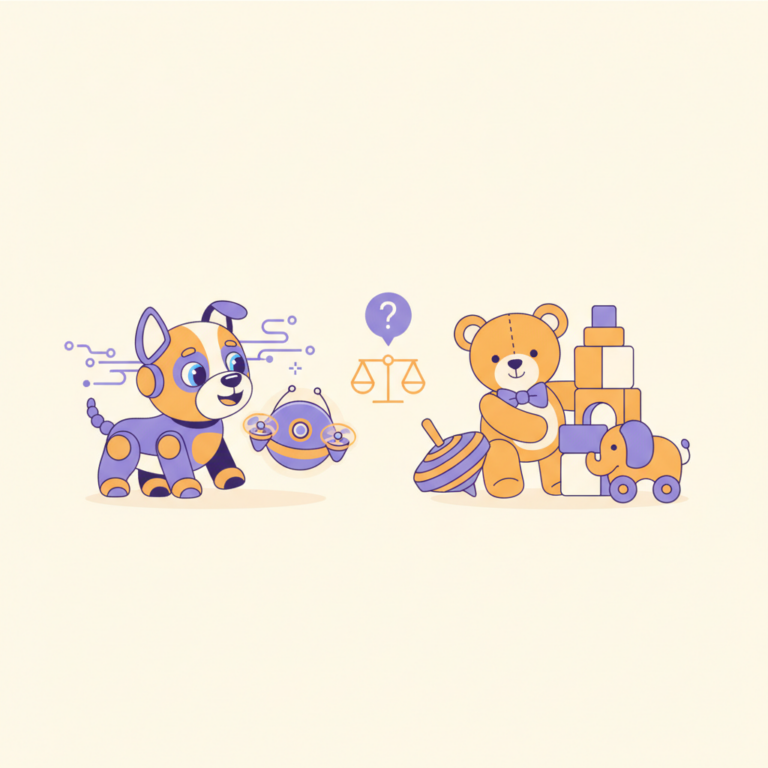
Robot Dog Toys vs. Traditional Toys: Which is Best for Your Pet?
When deciding between a robot dog toy and a traditional toy, consider your pet’s personality, play style, and your own preferences.
Interactive vs. Passive Play: Robot dog toys are designed for interactive play, often responding to your dog’s actions with movements, sounds, or lights. This can provide a more engaging experience for your pet. Traditional toys, on the other hand, are typically more passive, requiring your dog to initiate play.
Durability: Traditional toys, particularly those made of rubber or sturdy materials, can be more durable and better suited for aggressive chewers. Robot dog toys, while often made of durable materials, may have more delicate components that can be damaged if not used properly.
Cost: Robot dog toys tend to be more expensive than traditional toys due to their advanced features and technology. Consider your budget and whether the interactive features justify the additional cost.
Maintenance: Robot dog toys require more maintenance, including battery changes and regular cleaning. Traditional toys are generally low-maintenance, requiring only occasional cleaning.
Pet Preference: Ultimately, the best choice depends on your pet’s preferences. Some dogs may be more attracted to the interactive nature of robot dog toys, while others may prefer the simplicity of traditional toys.
Frequently Asked Questions About Robot Dog Toys: Expert Answers and Insights
1. How long do robot dog toys last?
The lifespan of a robot dog toy depends on several factors, including the quality of the materials, the frequency of use, and how well it is maintained. On average, a well-cared-for robot dog toy can last anywhere from six months to a few years.
2. Can robot dog toys be used for training?
Yes, many robot dog toys can be used as training aids. The interactive nature of these toys can help reinforce positive behaviors and provide mental stimulation for your dog.
3. Are robot dog toys suitable for all breeds?
Robot dog toys are generally suitable for most breeds, but it’s important to consider the size and age of your dog. Larger breeds may require more durable toys, while smaller breeds may need toys with smaller parts.
4. How do I clean a robot dog toy?
Most robot dog toys can be cleaned with a damp cloth and mild soap. Avoid submerging the toy in water unless it is explicitly designed to be waterproof.
5. Can robot dog toys be used outdoors?
Many robot dog toys are designed for both indoor and outdoor use. However, it’s important to ensure that the toy is suitable for outdoor conditions and that it is used in a safe, supervised environment.
How to Choose the Right Robot Dog Toy for You
Choosing the right robot dog toy involves considering several factors to ensure that it meets your needs and the needs of your pet.
1. Assess Your Dog’s Play Style: Consider whether your dog prefers interactive or passive play. If your dog enjoys engaging with toys that respond to their actions, a robot dog toy may be a good choice.
2. Consider Your Budget: Robot dog toys can vary widely in price. Determine how much you are willing to spend and look for a toy that offers the features you want within your budget.
3. Evaluate Durability: Look for a toy made of high-quality, durable materials that can withstand your dog’s play style. If your dog is an aggressive chewer, opt for a more robust model.
4. Check for Safety Features: Ensure that the toy has secure battery compartments and is made of non-toxic materials. Consider additional safety features such as motion sensors that can prevent the toy from being activated when not in use.
5. Look for Interactive Features: Consider the types of interactive features that would appeal to your dog, such as sounds, movements, or lights. Some toys offer more complex interactions, while others provide simpler stimuli.
6. Read Reviews and Ask for Recommendations: Look for reviews from other pet owners and ask for recommendations from friends or veterinarians. This can provide valuable insights into the pros and cons of different models.
By considering these factors, you can choose a robot dog toy that will provide a safe, enjoyable, and engaging experience for your pet.
Key takeaways
- Robot dogs use sensors and programming for movement and interaction
- Features range from basic to advanced like voice recognition
- Prices vary from $20 basic models to $200+ advanced versions
- Consider age appropriateness and safety features
- Battery life and charging methods vary by model
Frequently asked questions
How do I choose the right robot dog toy?
Consider age, features, and budget. Basic models suit younger kids, while advanced ones offer more interactivity.
Are robot dog toys safe for all ages?
Most are designed for ages 5+, but always check the manufacturer's age recommendation and safety guidelines.
What safety features should I look for?
Look for rounded edges, non-toxic materials, and secure battery compartments.
How long do the batteries last?
Battery life varies by model, typically lasting from a few hours to several days on a single charge.
Can robot dogs be left alone with pets?
It's generally safe, but supervision is recommended to prevent potential issues with curious pets.
How durable are robot dog toys?
Durability varies, but most are designed to withstand moderate play. Check reviews for specific models.
What is the average price range?
Prices range from $20 for basic models to over $200 for advanced versions with more features.
Do robot dogs require special maintenance?
Basic maintenance includes regular cleaning and battery replacement or charging as needed.
Can robot dogs be programmed?
Some advanced models allow for basic programming or customization of behaviors.
Are there any educational benefits?
Yes, they can help with learning about technology, responsibility, and basic programming concepts.