Best AI Learning Toys for Kids by Age
AI learning toys use adaptive algorithms to personalize educational content based on a child's interactions and progress. They cover subjects like reading, math, and coding, and are designed for different age groups.
What Are AI Learning Toys and Why Are They Important for Kids?
AI learning toys are interactive playthings designed to engage children in educational activities while utilizing artificial intelligence to adapt to their unique learning styles and paces. These toys often incorporate elements of adaptive learning, a method that adjusts the difficulty and type of content based on the child’s real-time performance and engagement. The primary goal of AI learning toys is to make education more personalized and effective, turning playtime into a valuable learning experience.
As parents and educators seek ways to prepare children for a rapidly evolving technological world, AI learning toys have gained prominence. These toys can introduce kids to fundamental concepts in reading, math, and coding, often in a fun and engaging manner that traditional toys cannot. The integration of AI allows these toys to provide feedback, encouragement, and customized challenges, making learning more interactive and less monotonous.
Understanding Adaptive Learning
Adaptive learning is a key feature of AI learning toys. It involves the use of algorithms and data analysis to modify the learning experience according to the child’s needs. For instance, if a child is excelling in a particular area, the toy can present more complex challenges to keep them engaged. Conversely, if a child struggles, the toy can offer simpler tasks or additional guidance.
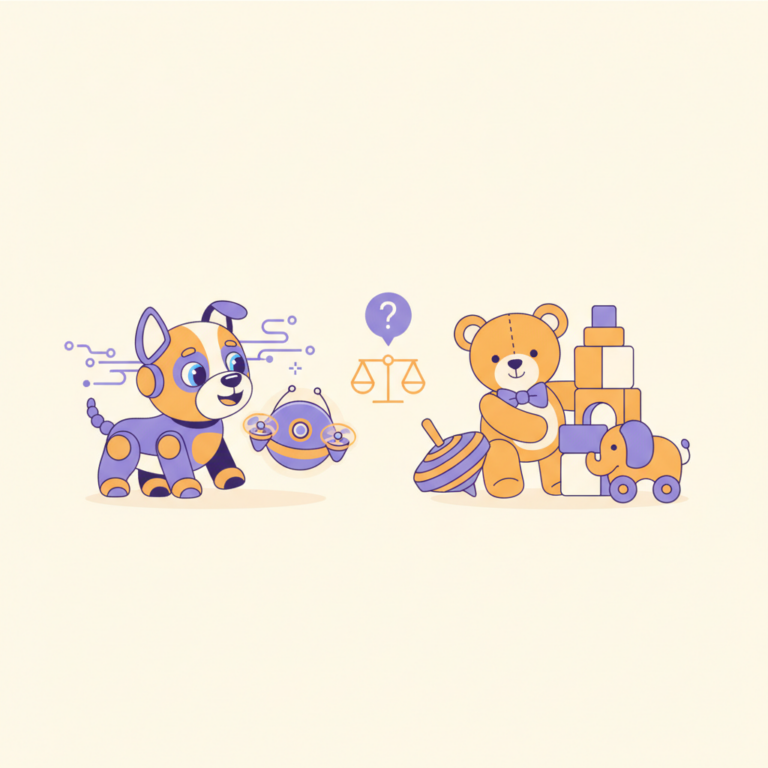
This approach contrasts with traditional toys that offer a static experience. While standard toys have their own benefits, they cannot adjust to a child’s individual progress or provide personalized feedback. AI learning toys, on the other hand, can:
- Track a child’s progress over time
- Identify strengths and areas for improvement
- Adjust the difficulty level to match the child’s current abilities
- Provide instant feedback and encouragement
The Role of AI in Education
The importance of AI learning toys extends beyond mere entertainment. They play a crucial role in early education by making learning more engaging and less intimidating. For example, a child who might be hesitant to engage with traditional reading materials may be more inclined to interact with a toy that uses AI to create a personalized reading experience, complete with interactive stories and games.
Moreover, AI learning toys can help bridge the gap between home and school. Parents can use these toys to supplement their children’s education, providing additional practice and reinforcement in key areas such as reading, math, and coding. This is particularly beneficial in an era where digital literacy is increasingly important.
Privacy Concerns and Considerations
While AI learning toys offer numerous benefits, they also raise important questions about privacy. These toys often collect data on a child’s performance and interactions, which can be used to improve the learning experience. However, parents should be aware of how this data is collected, stored, and used. It’s essential to choose toys from reputable manufacturers that prioritize data security and privacy.
Parents should look for toys that:
- Have clear privacy policies
- Allow parents to control the data collected
- Use encryption to protect sensitive information
- Are compliant with relevant data protection regulations
By considering these factors, parents can ensure that their children’s privacy is protected while still benefiting from the educational advantages of AI learning toys.
The Benefits of Adaptive Learning Toys: How Do They Enhance Education?
Personalized Learning Experience
One of the most significant advantages of adaptive learning toys is their ability to provide a personalized learning experience. Unlike traditional toys that offer a one-size-fits-all approach, adaptive toys can adjust to the child’s individual needs and pace. This customization helps maintain the child’s interest and motivation, as the toy can present challenges that are neither too easy nor too difficult.
For example, a child who is advanced in math can be given more complex problems, while a child who struggles can receive additional support and practice. This level of personalization is difficult to achieve with traditional toys and can lead to more effective learning outcomes.
Immediate Feedback and Encouragement
Adaptive learning toys can provide immediate feedback and encouragement, which is crucial for effective learning. When a child answers a question correctly, the toy can offer positive reinforcement, boosting the child’s confidence. Conversely, if a child makes a mistake, the toy can provide gentle guidance and support, helping the child learn from the experience.
This immediate feedback is not always possible with traditional toys, where a child might not know if they are correct until a parent or teacher reviews their work. The interactive nature of adaptive toys allows for a more dynamic and responsive learning environment.
Engagement and Motivation
Adaptive learning toys are designed to be engaging and fun, which can significantly enhance a child’s motivation to learn. By incorporating game-like elements and interactive features, these toys can capture a child’s attention and make learning feel less like a chore. This is particularly important for young children, who may not yet have the patience or focus for more traditional educational methods.
For instance, a coding toy that uses a game-like interface can make learning to code feel like playing a video game, encouraging children to practice and improve their skills without even realizing they are learning.
Comparison of Adaptive Learning Toy Types
When choosing an adaptive learning toy, it’s important to consider the type of toy and its specific benefits. The following table compares different types of AI learning toys based on their primary focus, best use cases, pros, and watch-outs:
| Type | Best for | Pros | Watch-outs |
|---|---|---|---|
| Reading Toys | Early literacy skills | Interactive stories, vocabulary building, phonics practice | May not cater to advanced readers |
| Math Toys | Basic to intermediate math skills | Engaging games, problem-solving challenges, personalized difficulty | May not cover advanced topics |
| Coding Toys | Introduction to programming concepts | Game-like interface, logical thinking, creativity | May require parental guidance for very young children |
By understanding the different types of AI learning toys and their benefits, parents can make informed decisions that best suit their child’s educational needs and preferences.
Types of AI Learning Toys: Reading, Math, and Coding Toys Explained
Reading Toys
Reading toys are designed to help children develop early literacy skills through interactive and engaging activities. These toys often use AI to create personalized reading experiences, adapting to the child’s reading level and pace. Features to look for in reading toys include:
- Interactive Stories: Toys that offer interactive stories can make reading more engaging, allowing children to participate in the narrative and make choices that affect the outcome.
- Vocabulary Building: Toys that focus on vocabulary building can help children expand their word knowledge, often through games and activities that reinforce word recognition and usage.
- Phonics Practice: Toys that incorporate phonics can help children learn the sounds of letters and how they combine to form words, which is essential for reading proficiency.
Math Toys
Math toys are designed to help children develop math skills through play. These toys often use AI to provide personalized challenges and feedback, adapting to the child’s current skill level. Key features to consider in math toys include:
- Engaging Games: Toys that use games to teach math concepts can make learning more enjoyable and less intimidating.
- Problem-Solving Challenges: Toys that present problem-solving challenges can help children develop critical thinking and reasoning skills.
- Personalized Difficulty: Toys that adjust the difficulty level based on the child’s performance can provide a more effective learning experience.
Coding Toys
Coding toys are designed to introduce children to programming concepts through interactive and hands-on activities. These toys often use AI to create engaging and educational experiences, adapting to the child’s progress and learning style. Important features to look for in coding toys include:
- Game-like Interface: Toys that use a game-like interface can make learning to code feel like playing a video game, encouraging children to practice and improve their skills.
- Logical Thinking: Toys that focus on logical thinking can help children develop problem-solving and critical thinking skills, which are essential for coding.
- Creativity: Toys that encourage creativity can inspire children to explore and experiment with coding, fostering a sense of curiosity and innovation.
By considering these features and the specific needs of their child, parents can choose the right AI learning toy to support their child’s educational journey.
How to Choose the Right AI Learning Toy: Key Criteria to Consider
Selecting the right AI learning toy for your child can be a daunting task given the wide range of options available. To make an informed decision, consider the following key criteria:
Age Appropriateness
One of the most crucial factors to consider is the age appropriateness of the toy. Manufacturers typically provide age recommendations based on developmental stages and safety considerations. For instance, toys designed for toddlers might focus on basic cause-and-effect learning, while those for older children could incorporate more complex problem-solving and coding skills. Always check the recommended age range and consider your child’s individual developmental level to ensure the toy will be both engaging and educational.
Educational Goals
Identify the specific educational goals you have for your child. Are you looking to improve their reading skills, enhance their math abilities, or introduce them to coding? Different AI learning toys focus on different areas of learning. For example, if you’re interested in boosting your child’s literacy skills, you might opt for a toy that uses AI to personalize reading experiences. Conversely, if coding is your goal, look for toys that offer interactive programming challenges.
Adaptability and Customization
The ability of a toy to adapt to your child’s learning pace and style is a significant advantage. Adaptive learning toys use AI to adjust the difficulty level, provide personalized feedback, and offer new challenges based on your child’s performance. This ensures that the toy remains engaging and effective over time. Additionally, consider the level of customization the toy offers. Can you set specific learning objectives or track your child’s progress? These features can be invaluable in supporting your child’s educational journey.
Engagement and Fun Factor
For a learning toy to be effective, it must capture and hold your child’s attention. Look for toys that incorporate elements of fun and play into the learning process. This could be through gamification, interactive storytelling, or creative challenges. A toy that is too rigid or boring is likely to be abandoned, no matter how educational it is. Consider your child’s interests and preferences when making your choice.
Safety and Durability
Safety is paramount when choosing any toy for your child. Ensure that the AI learning toy you select meets all relevant safety standards. Pay particular attention to age-appropriate warnings about small parts and button batteries, which can be hazardous if swallowed. Additionally, consider the durability of the toy, especially if it will be used frequently. A well-built toy can withstand the rigors of play and provide long-lasting educational value.
Budget Considerations
AI learning toys can vary significantly in price, from budget-friendly options to high-end models. Set a budget that aligns with your financial resources and prioritize features that are most important to you. Remember that the most expensive toy isn’t necessarily the best. Look for a balance between cost and the features that will benefit your child the most.
Reviews and Recommendations
Finally, consider reading reviews and seeking recommendations from other parents, educators, or child development experts. Reviews can provide insights into the toy’s effectiveness, durability, and user-friendliness. Recommendations from trusted sources can also guide you toward high-quality options that have been tried and tested.
AI Learning Toys by Age: Finding the Perfect Fit for Your Child
AI learning toys are designed to cater to different age groups, each with unique developmental needs and abilities. Here’s a guide to help you find the perfect AI learning toy for your child based on their age:
Toddlers (Ages 2-4)
At this stage, children are exploring the world around them and developing basic cognitive and motor skills. AI learning toys for toddlers often focus on simple cause-and-effect relationships, basic shapes, colors, and numbers. Look for toys that are easy to use, with large, intuitive buttons and colorful, engaging interfaces. Examples include interactive robots that teach numbers and letters through songs and games.
Preschoolers (Ages 4-6)
Preschoolers are beginning to develop more complex cognitive skills, such as problem-solving and early literacy and numeracy. AI learning toys for this age group often incorporate interactive stories, simple coding concepts, and basic math challenges. Toys that use AI to personalize learning experiences, such as adaptive reading apps or interactive math games, can be particularly beneficial.
Early Elementary (Ages 6-8)
Children in this age group are building on foundational skills and starting to engage in more complex learning activities. AI learning toys for early elementary students might include coding kits that teach programming through hands-on projects, or interactive science kits that use AI to guide experiments and explain scientific concepts. These toys should encourage critical thinking and creativity while reinforcing key academic skills.
Late Elementary (Ages 8-10)
As children progress into late elementary school, they are ready for more challenging learning experiences. AI learning toys for this age group could include advanced coding platforms that introduce text-based programming, or AI-driven educational games that cover a wide range of subjects, from history to geography. Look for toys that offer deeper engagement and more sophisticated problem-solving challenges.
Middle School (Ages 11-13)
Middle school students are often ready for highly interactive and intellectually stimulating AI learning toys. This might include sophisticated coding environments that allow for complex projects, or AI tutors that provide personalized instruction in subjects like algebra and geometry. These toys should support the development of critical thinking, analytical skills, and independent learning.
High School (Ages 14+)
For high school students, AI learning toys can serve as powerful tools for advanced learning and skill development. This might include AI-driven platforms that offer courses in computer science, engineering, or data analysis, or AI tutors that provide support in advanced math and science topics. These toys should encourage exploration, innovation, and the application of knowledge in real-world contexts.
Understanding Adaptive Learning: What It Means and How It Works
Adaptive learning is a core concept in AI learning toys, but what exactly does it mean, and how does it work?
The Basics of Adaptive Learning
Adaptive learning refers to the ability of a learning system, in this case, an AI learning toy, to adjust its content, difficulty level, and teaching approach based on the learner’s performance and needs. This is achieved through the use of algorithms that analyze data about the learner’s interactions, such as correct and incorrect answers, response times, and engagement levels.
How Adaptive Learning Works
AI learning toys that incorporate adaptive learning use a combination of machine learning and data analysis to personalize the learning experience. Here’s a simplified overview of how it works:
- Data Collection: The toy collects data on the child’s interactions, such as answers to questions, time spent on tasks, and progress through levels.
- Data Analysis: The AI analyzes the data to identify patterns and assess the child’s strengths and weaknesses.
- Adjustment: Based on the analysis, the toy adjusts the difficulty level, provides personalized feedback, and offers new challenges to keep the child engaged and challenged.
- Feedback Loop: The process continues in a continuous feedback loop, allowing the toy to adapt in real-time to the child’s evolving needs and abilities.
Benefits of Adaptive Learning
Adaptive learning offers several benefits:
- Personalization: The toy can tailor the learning experience to the child’s individual needs, providing a more effective and engaging learning experience.
- Engagement: By adjusting the difficulty level and offering new challenges, the toy can maintain the child’s interest and motivation.
- Efficiency: The toy can identify and address the child’s specific learning gaps, allowing for more efficient learning.
- Growth Mindset: Adaptive learning encourages a growth mindset by showing the child that their efforts lead to progress and improvement.
Considerations for Parents
While adaptive learning can greatly enhance the educational value of AI learning toys, it’s important for parents to be aware of how the system works and to monitor their child’s progress. Parents should also ensure that the toy provides a balanced learning experience, addressing a range of skills and subjects rather than focusing too narrowly on specific areas.
Privacy and Safety Concerns: Protecting Your Child’s Data with AI Toys
When considering AI learning toys for your child, it’s crucial to understand the privacy and safety implications that come with these advanced gadgets. AI toys often collect data to provide personalized learning experiences, but this raises concerns about how that data is stored, used, and protected.
Data Collection and Storage: AI learning toys typically collect data such as your child’s age, learning progress, and interaction patterns. This data is used to adapt the toy’s responses and challenges, making the learning experience more personalized. However, it’s important to know where this data is stored and who has access to it. Look for toys that clearly state their data storage practices and ensure they comply with child privacy laws such as the Children’s Online Privacy Protection Act (COPPA) in the United States.
Parental Controls: Opt for AI toys that offer robust parental controls. These controls allow you to manage what data is collected, how it is used, and who can access it. Some toys provide dashboards where parents can review their child’s progress and control privacy settings. Always review the privacy settings and adjust them according to your comfort level.
Encryption and Security: Ensure that the toy uses encryption to protect the data it collects. Encryption helps safeguard the information from unauthorized access. Additionally, check if the company provides regular security updates to address any vulnerabilities that may arise.
Online Connectivity: Many AI toys connect to the internet to update content or provide additional features. Be cautious with toys that require constant online connectivity, as they may pose higher security risks. If possible, choose toys that allow for offline use or have clear policies on how they handle online data transmission.
Third-Party Services: Some AI toys may integrate with third-party services or apps. Review the privacy policies of these third parties to understand how they handle your child’s data. Avoid toys that share data with third parties without explicit consent or clear justification.
Physical Safety: Besides data privacy, consider the physical safety of the toy. Ensure that it is made from non-toxic materials and does not have small parts that could pose a choking hazard for younger children. Always supervise younger children during play to prevent accidents.
Caring for and Troubleshooting AI Learning Toys: Tips for Parents
To ensure your child’s AI learning toy remains in good condition and functions properly, follow these care and troubleshooting tips:
Regular Maintenance: Clean the toy regularly according to the manufacturer’s instructions. Use a soft, damp cloth to wipe down surfaces and avoid using harsh chemicals that could damage the toy.
Battery Management: If the toy is battery-operated, monitor the battery levels and replace them as needed. Some toys have rechargeable batteries; in this case, establish a regular charging routine to ensure the toy is always ready for use.
Software Updates: Keep the toy’s software up to date. Manufacturers often release updates to fix bugs, improve performance, and add new features. Check the manufacturer’s website or the toy itself for update notifications.
Troubleshooting Common Issues:
- Connection Problems: If the toy is not connecting to the internet or a companion app, check your Wi-Fi connection and ensure the toy is within range. Restart the toy and your router if necessary.
- App Issues: If the companion app is not working properly, try closing and reopening it. Ensure that your device’s operating system is up to date and that the app is also updated to the latest version.
- Sound or Visual Problems: If the toy is not producing sound or displaying visuals correctly, check the volume settings and ensure that no physical obstructions are blocking the speakers or screen.
Contact Customer Support: If troubleshooting steps do not resolve the issue, contact the manufacturer’s customer support for further assistance. Provide them with detailed information about the problem and any error messages you may have encountered.
AI Learning Toys FAQ: Answering Common Questions from Parents
1. Are AI learning toys suitable for all ages?
AI learning toys are designed with specific age ranges in mind. It’s important to choose a toy that matches your child’s developmental stage. For instance, younger children may benefit from toys that focus on basic concepts like colors and shapes, while older children might engage with more complex subjects like coding and problem-solving.
2. How do AI learning toys adapt to my child’s learning style?
AI learning toys use algorithms to analyze your child’s interactions and adjust the difficulty level or type of content accordingly. This adaptability helps maintain engagement and provides a personalized learning experience.
3. Can AI learning toys replace traditional learning methods?
AI learning toys are not meant to replace traditional learning methods but rather complement them. They provide an interactive and engaging way for children to learn new skills and reinforce concepts taught in school.
4. Are AI learning toys safe for my child?
When chosen carefully, AI learning toys are safe for children. Ensure the toy complies with safety standards and has appropriate age grading. Additionally, follow the care and troubleshooting tips to maintain the toy’s safety and functionality.
5. How long do AI learning toys last?
The lifespan of an AI learning toy depends on factors such as build quality, frequency of use, and technological advancements. Some toys may last several years, while others may become obsolete as new technologies emerge.
Key Takeaways: Choosing the Right AI Learning Toy for Your Child
When selecting an AI learning toy, consider the following key points:
1. Age Appropriateness: Ensure the toy is suitable for your child’s age and developmental stage. This ensures the content is engaging and challenging without being overwhelming.
2. Learning Objectives: Identify what skills or subjects you want your child to learn. Whether it’s reading, math, coding, or problem-solving, choose a toy that aligns with your educational goals.
3. Privacy and Security: Prioritize toys with strong privacy policies and robust security measures. Look for toys that offer parental controls and comply with child privacy laws.
4. Adaptability: Opt for toys that can adapt to your child’s learning pace and style. This ensures a personalized and effective learning experience.
5. Durability and Maintenance: Consider the build quality and ease of maintenance. A durable toy that is easy to clean and update will provide long-lasting value.
By considering these factors, you can choose an AI learning toy that not only entertains but also educates your child in a safe and engaging manner.
Key takeaways
- Adaptive learning adjusts content based on child's responses
- Subjects include reading, math, coding, and problem-solving
- Age-appropriate toys ensure effective learning
- Check for evidence-based claims, not just marketing
- Privacy features are crucial for children's data protection
Frequently asked questions
What is adaptive learning in AI toys?
Adaptive learning uses algorithms to personalize content based on a child's interactions and learning progress.
What age groups are AI learning toys suitable for?
AI learning toys are available for various age groups, typically starting from 3 years and up.
How do AI toys support different subjects?
They support subjects like reading, math, coding, and critical thinking through interactive and adaptive content.
What should I look for when choosing an AI learning toy?
Look for age-appropriate content, evidence-based learning outcomes, and strong privacy features.
Are AI learning toys safe for children?
Safety varies by product, so check for certifications, age recommendations, and privacy policies.
How long do the batteries or charging last?
Battery life varies, but most AI toys offer several hours of use on a single charge.
What is the typical cost range for AI learning toys?
Prices range from $30 to $200, depending on features, brand, and complexity.
How durable are AI learning toys?
Durability varies, so check product reviews and materials; some are designed for rough play.
Do AI learning toys require an internet connection?
Most AI toys need an internet connection for updates and adaptive features, but some offer offline modes.
Can AI learning toys replace traditional learning?
They complement traditional learning by providing interactive and personalized experiences.