Best Robot Dog Toys for Kids: What to Look For Before You Buy
When choosing a robot dog toy for kids, consider the child's age, desired interactivity level (sound, touch, voice, app), style preference (realistic or cartoon), battery type (rechargeable vs. replaceable), and safety features like secure battery compartments.
What Are Robot Dog Toys and Why Are They Great for Kids?
Robot dog toys are interactive, electronic playthings designed to mimic the behavior and companionship of a real dog, without the responsibility of pet ownership. These toys have become increasingly popular among children and parents alike, thanks to their ability to provide entertainment, education, and emotional engagement. The primary keyword, robot dog toy, encompasses a wide range of products, from simple, sound-activated toys to sophisticated, app-controlled companions with advanced features.
One of the main reasons robot dog toys are great for kids is that they offer a unique blend of fun and learning. Many of these toys are designed to respond to touch, sound, and even voice commands, which can help children develop social and emotional skills. For instance, a child might learn about responsibility and empathy by “caring” for their robot pet, or they might improve their problem-solving skills by figuring out how to interact with the toy’s various features.
Additionally, robot dog toys can be a great alternative for families who are unable to have a real pet due to allergies, living arrangements, or other constraints. They provide the joy and companionship of a pet without the need for feeding, grooming, or veterinary care. This can be particularly appealing for children who are eager to experience the benefits of pet ownership but are not yet ready for the full commitment.
Moreover, these toys can be a source of comfort and companionship for children, especially those who may feel lonely or anxious. The interactive nature of robot dog toys can help children feel less isolated, as they can engage with their toy in a way that feels meaningful and rewarding.
Types of Robot Dog Toys: Realistic vs. Cartoon Styles
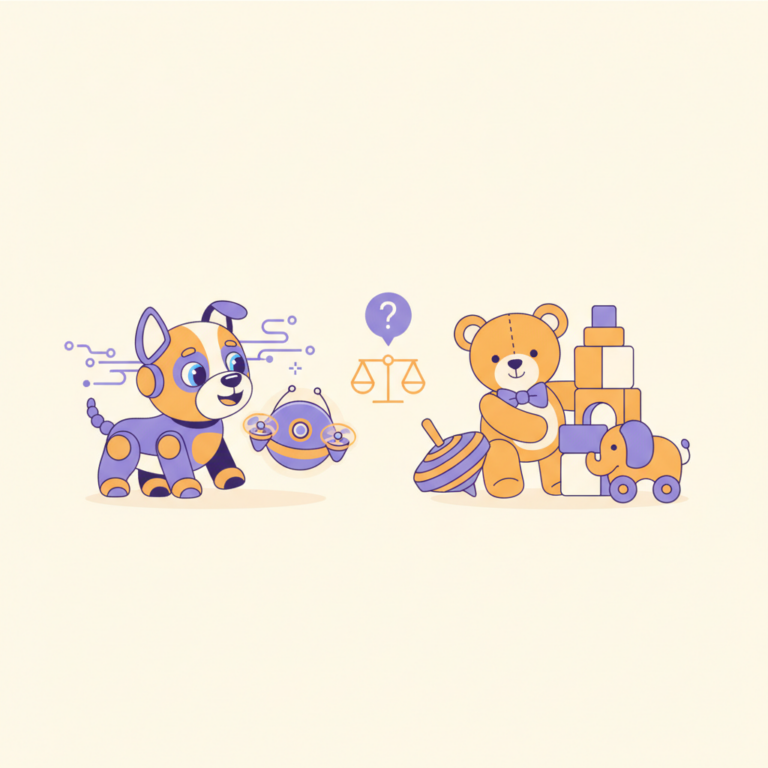
When choosing a robot dog toy, one of the first decisions you’ll need to make is whether you want a toy that looks and acts like a real dog or one that has a more cartoonish, stylized appearance. Both styles have their own unique appeal and advantages, and the right choice will depend on your child’s preferences and what you hope to achieve with the toy.
Realistic robot dog toys are designed to closely mimic the appearance and behavior of a real dog. They often have fur-like textures, movable limbs, and expressive eyes. These toys can respond to touch, sound, and voice commands in ways that mimic the behavior of a living animal. For example, they might wag their tail, bark, or even “sleep” when left alone for a period of time. Realistic robot dogs can provide a more immersive experience for children who are interested in animals and want to feel like they have a real pet.
On the other hand, cartoon-style robot dog toys offer a more whimsical, playful approach. These toys often have exaggerated features, bright colors, and a more stylized appearance. They might have unique abilities or personalities that set them apart from realistic models. For example, a cartoon-style robot dog might be able to perform tricks, tell jokes, or even dance. These toys can be a great choice for children who enjoy imaginative play and are looking for a toy that offers a fun, lighthearted experience.
Here’s a comparison table to help you decide which style might be the best fit for your child:
| Criteria | Realistic Robot Dog | Cartoon-Style Robot Dog |
|---|---|---|
| Appearance | Resembles a real dog with fur, movable limbs, and expressive eyes | Stylized, exaggerated features with bright colors and unique designs |
| Behavior | Mimics real dog behavior with barking, tail wagging, and “sleep” modes | Offers unique abilities like telling jokes, dancing, or performing tricks |
| Interaction | Responds to touch, sound, and voice commands in realistic ways | Provides playful, imaginative interactions that encourage creativity |
| Appeal | Ideal for children who want a realistic pet experience | Great for children who enjoy imaginative play and whimsical fun |
Ultimately, the choice between a realistic and a cartoon-style robot dog toy will depend on your child’s individual preferences and what you hope to achieve with the toy. Consider your child’s interests, as well as any specific features or abilities that might appeal to them.
How Interactive Should Your Robot Dog Toy Be? (Sound, Touch, Voice, App)
One of the key features that sets robot dog toys apart from traditional stuffed animals is their level of interactivity. These toys can respond to a variety of inputs, including sound, touch, voice commands, and even smartphone apps. The right level of interactivity for your child will depend on their age, interests, and what you hope to achieve with the toy.
Sound-activated robot dog toys are among the simplest and most affordable options. These toys can respond to claps, whistles, or other sounds, which can make them a great choice for younger children who are just learning about cause and effect. For example, a sound-activated robot dog might bark or move in response to a clap, providing a fun and engaging experience for young children.
Touch-sensitive robot dog toys offer a more advanced level of interactivity. These toys can respond to petting, tapping, or other forms of touch, which can make them feel more like a real pet. For example, a touch-sensitive robot dog might wag its tail or make happy sounds when petted, providing a more immersive experience for children who enjoy physical interaction.
Voice-activated robot dog toys take interactivity to the next level by responding to voice commands. These toys can understand simple commands like “sit,” “stay,” or “come,” which can help children develop their communication skills and feel more connected to their toy. Voice-activated robot dogs can be a great choice for older children who are looking for a more interactive and engaging experience.
App-controlled robot dog toys offer the highest level of interactivity, as they can be controlled via a smartphone app. These toys often have a wide range of features, including the ability to perform tricks, play games, and even interact with other app-controlled toys. App-controlled robot dogs can provide a rich, immersive experience for children who are comfortable using technology and are looking for a toy that offers endless possibilities.
Here’s a comparison table to help you decide which level of interactivity might be the best fit for your child:
| Criteria | Sound-Activated | Touch-Sensitive | Voice-Activated | App-Controlled |
|---|---|---|---|---|
| Age Range | Younger children (3-5) | Young children (4-6) | Older children (6-10) | Older children (8+) |
| Interaction | Responds to sound | Responds to touch | Responds to voice commands | Controlled via smartphone app |
| Features | Basic movements and sounds | Petting, tapping, and other touch-based interactions | Simple commands like “sit,” “stay,” and “come” | Wide range of features, including tricks, games, and interactions with other toys |
| Appeal | Great for simple, engaging play | Ideal for children who enjoy physical interaction | Perfect for children who want a more interactive experience | Best for children who are comfortable using technology and want a toy with endless possibilities |
Choosing the Right Robot Dog Toy: Rechargeable vs. Battery-Powered
Another important consideration when choosing a robot dog toy is whether it is rechargeable or battery-powered. Each option has its own advantages and disadvantages, and the right choice will depend on your child’s age, your budget, and your preferences.
Rechargeable robot dog toys are often more expensive upfront, but they can save you money in the long run, as you won’t need to buy replacement batteries. These toys are typically charged via a USB cable or a charging dock, which can be a convenient option for families who are already using similar charging methods for other devices. Rechargeable toys are also more environmentally friendly, as they reduce the number of batteries that end up in landfills.
On the other hand, battery-powered robot dog toys can be more convenient for families who don’t want to worry about charging the toy regularly. These toys often use standard AA or AAA batteries, which are widely available and easy to replace. However, they can be more expensive in the long run, as you’ll need to buy replacement batteries periodically.
Here’s a comparison table to help you decide which option might be the best fit for your family:
| Criteria | Rechargeable | Battery-Powered |
|---|---|---|
| Cost | More expensive upfront, but cheaper in the long run | Cheaper upfront, but more expensive in the long run |
| Convenience | Requires regular charging | Requires periodic battery changes |
| Environmental Impact | More environmentally friendly | Less environmentally friendly |
| Availability | Charging cables and docks are widely available | Batteries are widely available |
When deciding between rechargeable and battery-powered robot dog toys, consider your budget, your family’s lifestyle, and your environmental values. If you don’t mind the initial cost and are looking for a more environmentally friendly option, a rechargeable toy might be the best choice. If you prefer a more convenient option and don’t mind buying replacement batteries, a battery-powered toy might be more suitable.
Matching the Robot Dog Toy to Your Child’s Age and Interests
When selecting a robot dog toy for a child, it’s crucial to consider their age and interests to ensure the toy is both engaging and appropriate. Younger children, typically between the ages of 3 and 5, will benefit from simple, intuitive designs that respond to basic interactions like touch and sound. Look for robot dogs that have large, easy-to-press buttons and respond with cheerful sounds or simple movements. These toys should focus on sensory stimulation and basic cause-and-effect learning.
For children aged 6 to 9, you can introduce more complex features. This age group often enjoys robot dogs that can perform tricks, respond to voice commands, or even follow simple programming sequences. Toys with app integration can be particularly appealing, as they offer interactive games and activities that can grow with the child’s abilities. It’s important to ensure that the app is age-appropriate and easy to navigate.
Older children, from 10 and up, may be ready for more advanced robot dogs that offer sophisticated programming options and a wider range of interactive features. These toys can serve as a gateway to STEM education, sparking interest in coding and robotics. Look for models that allow for customization and offer a variety of challenges or tasks to keep them engaged over time.
Additionally, consider the child’s interests. If they love animals, a realistic robot dog with lifelike movements and sounds might be the best fit. If they are more into technology and gadgets, a high-tech model with app connectivity and programmable functions could be more appealing.
Safety First: What to Look for in a Safe Robot Dog Toy for Kids
Safety is a paramount concern when choosing any toy for a child. For robot dog toys, start by checking the age grading. This will give you a clear indication of whether the toy is suitable for your child’s developmental stage. Toys with small parts, for example, should be avoided for children under three years old due to the risk of choking.
Examine the construction of the toy. Look for smooth edges and durable materials that can withstand rough play. If the robot dog has detachable parts, ensure they are securely attached and not small enough to pose a choking hazard. Pay special attention to any cords or wires, as these can be a strangulation risk if not properly designed.
Battery safety is another critical factor. Opt for toys with enclosed battery compartments that require a tool to open, preventing young children from accessing the batteries. Button batteries, in particular, can be extremely dangerous if swallowed, so ensure they are well-secured.
Check for any sharp edges or potential pinch points, and look for certifications from safety organizations like ASTM International or the Consumer Product Safety Commission (CPSC). These certifications indicate that the toy has undergone rigorous testing and meets established safety standards.
Finally, always supervise young children during their first interactions with a new toy to ensure they use it safely and understand any potential risks.
Caring for Your Robot Dog Toy: Maintenance and Troubleshooting Tips
Proper care and maintenance can significantly extend the life of your robot dog toy. Start by regularly checking the toy for any signs of wear and tear, such as loose parts or frayed wires. If you notice any damage, discontinue use until it can be repaired or replaced.
Battery maintenance is crucial for rechargeable models. Avoid overcharging the battery, as this can degrade its performance over time. Follow the manufacturer’s guidelines for charging times and methods. For battery-powered toys, always use the recommended type and size of batteries to prevent damage.
Cleaning your robot dog toy is also important, especially if it spends time on the floor or around pets. Use a soft, damp cloth to wipe down the exterior, and avoid submerging the toy in water unless it is explicitly designed to be waterproof. Pay special attention to any crevices or textured surfaces where dirt and debris can accumulate.
If your robot dog toy is not functioning as expected, consult the troubleshooting section of the user manual. Common issues include connectivity problems with app-controlled models, which can often be resolved by resetting the device or reinstalling the app. For mechanical problems, such as a stuck wheel or unresponsive sensor, check for any obstructions and ensure the toy is on a flat, even surface.
Regular software updates can also help maintain optimal performance, especially for app-connected toys. Check the manufacturer’s website or app for any available updates and follow the instructions for installation.
Frequently Asked Questions About Robot Dog Toys for Kids
What age is appropriate for a robot dog toy?
Robot dog toys are available for children as young as 3 years old, with age-appropriate features like simple sounds and movements. Older children can enjoy more advanced models with app connectivity and programmable functions.
Are robot dog toys safe for young children?
Most robot dog toys are designed with safety in mind, but it’s important to check for small parts, secure battery compartments, and certifications from safety organizations. Always supervise young children during their first interactions with a new toy.
How long do the batteries last in a robot dog toy?
Battery life varies depending on the model and usage. Rechargeable models typically offer several hours of play on a full charge, while battery-powered models’ longevity depends on the type and number of batteries used.
Can robot dog toys be repaired if they break?
Many robot dog toys can be repaired, especially if the damage is minor. Consult the user manual for troubleshooting tips or contact the manufacturer for repair services.
Are robot dog toys suitable for pets?
While some robot dog toys are designed to interact with pets, it’s important to supervise their use to prevent damage or injury. Ensure the toy is durable enough to withstand pet interaction and has no small parts that could be swallowed.
How to Choose the Right Robot Dog Toy for You
Choosing the right robot dog toy involves balancing your child’s age, interests, and safety with your budget and the toy’s features. Start by considering the age appropriateness of the toy, ensuring it matches your child’s developmental stage. Look for features that will engage your child, whether it’s lifelike movements, voice commands, or app connectivity.
Consider the toy’s interactivity and the level of engagement it offers. Some toys are designed for simple play, while others offer more complex interactions and educational benefits. If your child is interested in technology and coding, a programmable robot dog could be a great choice.
Think about the toy’s durability and maintenance requirements. A well-built toy with easy-to-replace batteries and simple cleaning instructions will provide longer-lasting enjoyment. Finally, set a budget and compare features to find the best value for your money. With these considerations in mind, you’ll be well-equipped to choose a robot dog toy that will delight and inspire your child.
Key takeaways
- Match interactivity features to child's age and abilities
- Consider realistic vs cartoon style based on preference
- Check battery type - rechargeable or replaceable
- Ensure safety with secured small parts and button batteries
- Look for durable materials for long-lasting play
Frequently asked questions
What age range is appropriate for robot dog toys?
Most robot dog toys are designed for children aged 3-10 years, with specific models targeting different age groups based on complexity and safety.
How important is interactivity in a robot dog toy?
Interactivity is crucial as it determines engagement. Basic models offer sound and touch response, while advanced ones include voice and app control.
Should I choose a realistic or cartoon-style robot dog?
The choice depends on the child's preference. Realistic styles may appeal to those who want a lifelike pet, while cartoon styles often have more playful features.
What should I know about battery types in robot dog toys?
Rechargeable batteries are cost-effective long-term, while replaceable batteries offer convenience but may increase ongoing costs.
How durable are robot dog toys?
Durability varies by model. Look for sturdy construction and read reviews to gauge how well the toy withstands rough play.
Are there any safety concerns with robot dog toys?
Ensure the toy has secured small parts and safe battery compartments to prevent choking hazards and access to button batteries.
Can robot dog toys help with child development?
Yes, they can aid in developing motor skills, cognitive abilities, and social interaction, especially with interactive features.
What is the average cost of a quality robot dog toy?
Prices range from $20 to $100, with more expensive models offering advanced features and better durability.
How do I maintain a robot dog toy?
Regularly check for wear and tear, clean as needed, and ensure batteries are properly managed to prolong the toy's lifespan.
Are robot dog toys suitable for children with pets?
Yes, they can be a good introduction to pet care, but ensure the toy is durable enough to withstand interaction with real pets.