Best Educational Toys for 3-Year-Olds
Choose educational toys for 3-year-olds that promote creativity, problem-solving, and motor skills. Look for age-appropriate toys that are safe, durable, and offer good value for money.
## Why Are Educational Toys Important for 3-Year-Olds?
At three years old, children are entering a critical stage of development where their brains are growing at an astonishing rate. This is a period marked by rapid language acquisition, fine and gross motor skill development, and the beginning of more complex social interactions. **Educational toys for 3-year-olds** play a pivotal role in supporting these developmental milestones in a fun and engaging way.
### Cognitive Development
Three-year-olds are naturally curious and eager to learn about the world around them. Educational toys can help channel this curiosity into meaningful learning experiences. Toys that involve problem-solving, such as simple puzzles or building blocks, help develop critical thinking skills. These activities encourage children to think logically, understand spatial relationships, and develop hand-eye coordination. For instance, a set of wooden blocks can teach children about balance and gravity while also allowing them to express creativity.
### Language Skills
Language development is a key area of growth for 3-year-olds. Toys that incorporate letters, numbers, or simple words can significantly enhance vocabulary and language comprehension. For example, a toy that recites the alphabet or asks the child to identify colors and shapes can reinforce what they learn at home or in preschool. Interactive toys that encourage conversation, such as dolls or action figures, can also help children practice their speaking skills in a comfortable, play-based environment.
### Social and Emotional Growth
Three-year-olds are just beginning to navigate the complexities of social interactions and emotions. Toys that involve role-playing, such as kitchen sets or tool benches, allow children to mimic adult behaviors and learn about cooperation and sharing. These types of toys also help children understand different roles and perspectives, which is crucial for developing empathy. Additionally, toys that allow for open-ended play can help children express their emotions and develop a sense of self.
### Motor Skills
Fine and gross motor skills are still developing at this age, and educational toys can provide the necessary practice to refine these skills. Toys that require grasping, stacking, or manipulating small objects can improve dexterity and hand strength. For example, toys with buttons, levers, and knobs can help children develop the pincer grip, which is essential for writing later on. On the other hand, toys that encourage movement, such as ride-on toys or tricycles, help develop gross motor skills and coordination.
### The Role of Play in Learning
Play is the primary way through which 3-year-olds learn. Educational toys that are designed to be fun and engaging can make learning feel like a natural part of play. This approach not only makes learning more enjoyable but also helps children retain information better. When children are actively involved in play, they are more likely to be motivated and focused, which are crucial elements for effective learning.
In summary, educational toys for 3-year-olds are important because they support various aspects of development, from cognitive and language skills to social, emotional, and motor skills. These toys provide a structured yet playful environment where children can explore, learn, and grow at their own pace.
## What Are the Main Types of Educational Toys for 3-Year-Olds?
When selecting educational toys for a 3-year-old, it’s essential to understand the different types available and what each type offers in terms of learning and development. Here, we break down the main categories and what they are best suited for.
### 1. **Puzzles and Shape Sorters**
**Best for:** Cognitive development, problem-solving, and fine motor skills.
– **Pros:**
– Enhance spatial awareness and hand-eye coordination.
– Teach children about shapes, colors, and patterns.
– Encourage logical thinking and persistence.
– **Watch-outs:**
– Some puzzles may have small pieces that pose a choking hazard.
– Ensure the puzzle is age-appropriate to avoid frustration.
### 2. **Building Blocks and Construction Sets**
**Best for:** Creativity, motor skills, and understanding basic physics.
– **Pros:**
– Allow for open-ended play and creativity.
– Develop fine motor skills and hand strength.
– Teach concepts like balance, gravity, and symmetry.
– **Watch-outs:**
– Larger sets can be expensive.
– Some sets may have small parts that are not suitable for younger children.
### 3. **Role-Playing Toys**
**Best for:** Social skills, emotional development, and creativity.
– **Pros:**
– Encourage imitation of adult roles and behaviors.
– Help children understand social dynamics and relationships.
– Foster creativity and imagination.
– **Watch-outs:**
– Some role-playing toys may have small parts or accessories.
– Ensure the toy is age-appropriate to avoid unrealistic expectations.
### 4. **Interactive Learning Toys**
**Best for:** Language development, basic math, and problem-solving.
– **Pros:**
– Often include buttons, lights, and sounds to engage children.
– Teach letters, numbers, and basic concepts.
– Can be used independently, promoting self-directed learning.
– **Watch-outs:**
– Some toys may be too advanced for younger 3-year-olds.
– Battery-operated toys can be noisy and may require frequent battery changes.
### 5. **Art and Craft Supplies**
**Best for:** Creativity, fine motor skills, and self-expression.
– **Pros:**
– Allow for open-ended creativity and self-expression.
– Develop fine motor skills and hand-eye coordination.
– Encourage patience and focus.
– **Watch-outs:**
– Some materials may be messy or require supervision.
– Ensure materials are non-toxic and age-appropriate.
### 6. **Outdoor Toys**
**Best for:** Gross motor skills, physical activity, and exploration.
– **Pros:**
– Encourage physical activity and outdoor play.
– Develop balance, coordination, and strength.
– Provide opportunities for exploration and discovery.
– **Watch-outs:**
– Some toys may require a lot of space.
– Ensure the toy is safe for outdoor use and appropriate for the child’s age.
## How to Choose the Best Educational Toys for Your 3-Year-Old: Key Criteria
Choosing the right educational toy for your 3-year-old involves more than just picking something that looks fun. Here are some key criteria to consider:
### 1. **Age Appropriateness**
– **Developmental Stage:** Ensure the toy is suitable for a 3-year-old’s developmental stage. Toys that are too advanced may cause frustration, while those that are too simple may not hold their interest.
– **Safety:** Check for small parts, sharp edges, and other potential hazards. Look for toys that meet safety standards and are labeled as safe for children under 3 years old.
### 2. **Educational Value**
– **Learning Objectives:** Consider what skills or concepts the toy is designed to teach. Does it focus on language, math, problem-solving, or creativity?
– **Engagement:** The toy should be engaging and hold the child’s interest. Look for toys that offer a balance between challenge and enjoyment.
### 3. **Durability and Quality**
– **Material:** Choose toys made from durable, non-toxic materials. Wooden toys, for example, are often more durable and environmentally friendly than plastic ones.
– **Construction:** Check for sturdy construction and good craftsmanship. A well-made toy will withstand rough play and last longer.
### 4. **Value for Money**
– **Cost:** While expensive toys are not necessarily better, consider the value the toy provides in terms of learning and enjoyment. Sometimes, a simple, well-designed toy can offer more value than a flashy, high-tech one.
– **Longevity:** Look for toys that can grow with your child or be used in multiple ways. This increases the value and extends the toy’s usefulness.
### 5. **Child’s Interests**
– **Personal Preference:** Consider what your child is interested in. If they love music, a toy that incorporates music may be more engaging. If they enjoy building, a set of blocks or a construction set might be ideal.
### 6. **Comparison of Types**
Here’s a detailed comparison of the main types of educational toys for 3-year-olds based on the criteria discussed:
| Type | Best for | Pros | Watch-outs |
|---|---|---|---|
| Puzzles and Shape Sorters | Cognitive development, problem-solving, fine motor skills | Enhances spatial awareness, teaches shapes and colors, encourages logical thinking | Small parts, age-appropriateness |
| Building Blocks and Construction Sets | Creativity, motor skills, understanding basic physics | Open-ended play, develops fine motor skills, teaches balance and gravity | Cost, small parts |
| Role-Playing Toys | Social skills, emotional development, creativity | Encourages imitation, helps understand social dynamics, fosters creativity | Small parts, age-appropriateness |
| Interactive Learning Toys | Language development, basic math, problem-solving | Engaging, teaches letters and numbers, promotes self-directed learning | May be too advanced, battery-operated |
| Art and Craft Supplies | Creativity, fine motor skills, self-expression | Open-ended creativity, develops fine motor skills, encourages patience | Messy, supervision needed |
| Outdoor Toys | Gross motor skills, physical activity, exploration | Encourages physical activity, develops balance and coordination, provides opportunities for exploration | Space requirements, safety |
By considering these criteria and the specific needs and interests of your child, you can choose the best educational toys that will support their development and provide hours of enjoyment.
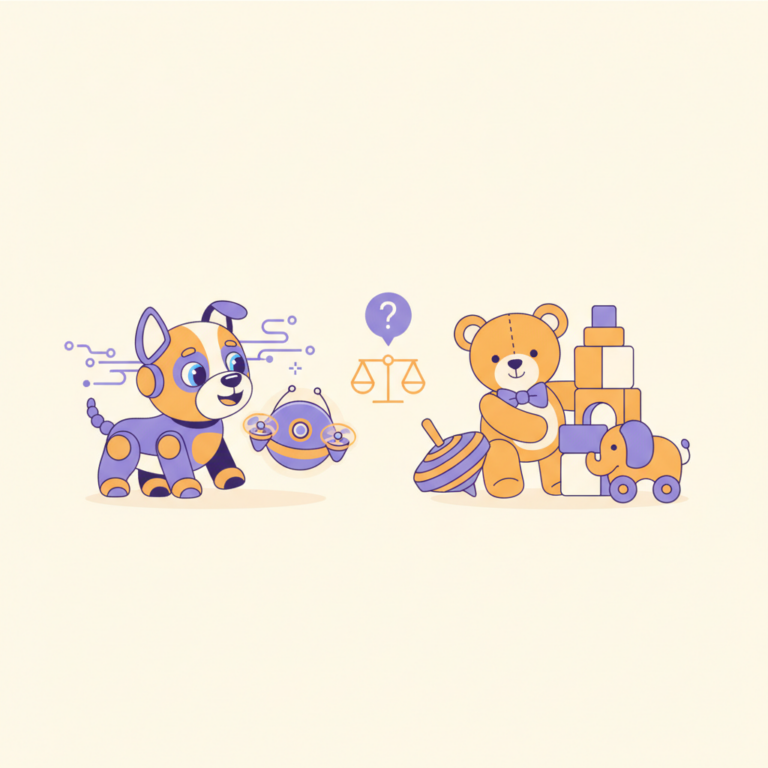
Interactive vs. Traditional: Which Educational Toys Are Right for Your Child?
When selecting educational toys for your 3-year-old, you’ll encounter a wide range of options that fall into two broad categories: interactive and traditional. Understanding the differences between these types can help you make more informed choices that align with your child’s learning style and interests.
Interactive toys are designed to engage children through technology, sound, and motion. These toys often include buttons, lights, and sometimes even voice recognition or app integration. For instance, interactive books with sound effects or electronic building blocks that respond to touch can captivate a child’s attention and encourage active participation. The primary advantage of interactive toys is that they can provide immediate feedback, which can be highly motivating for young children. They often incorporate elements of gamification, making learning feel like play. However, it’s important to balance interactive toys with other types to ensure your child isn’t overly reliant on digital stimulation.
On the other hand, traditional toys encompass a wide range of classic playthings, from wooden blocks and puzzles to dolls and action figures. These toys often encourage more open-ended play, allowing children to use their imagination and creativity. For example, a set of wooden blocks can be used to build a variety of structures, teaching spatial awareness and problem-solving skills. Traditional toys often require the child to initiate the play and determine the rules, which can foster independence and decision-making abilities. They also tend to be more durable and timeless, often becoming cherished heirlooms passed down through generations.
When deciding between interactive and traditional toys, consider your child’s personality and learning preferences. If your child is naturally drawn to screens and electronic devices, interactive toys might be a good way to channel that interest into educational play. However, if your child enjoys imaginative and creative play, traditional toys could be more appropriate. A balanced approach is often best, incorporating both types to provide a well-rounded play experience.
Additionally, consider the environment in which the toy will be used. Interactive toys often require batteries and may produce noise, which might not be suitable for quiet time or shared living spaces. Traditional toys, conversely, are generally quieter and can be used anywhere, making them versatile options for different settings.
Key Takeaways:
- Interactive toys offer immediate feedback and can be highly engaging, but should be balanced with other types of play.
- Traditional toys encourage imaginative and open-ended play, fostering independence and creativity.
- Consider your child’s personality and learning preferences when choosing between interactive and traditional toys.
- A balanced approach that incorporates both types can provide a well-rounded play experience.
Age and Developmental Stage: Matching Toys to Your 3-Year-Old’s Needs
At three years old, children are undergoing significant developmental changes, and their play preferences and abilities can vary widely. It’s crucial to select toys that align with your child’s current developmental stage to support their growth and learning effectively.
Three-year-olds are typically developing their fine and gross motor skills, so toys that involve physical activity, such as riding toys or tricycles, can be excellent choices. These toys help improve coordination, balance, and strength. Additionally, toys that encourage manipulation and dexterity, like stacking blocks, shape sorters, and simple puzzles, can enhance fine motor skills and hand-eye coordination.
Cognitive development is also a key area of focus at this age. Toys that introduce basic concepts such as numbers, letters, colors, and shapes can be highly beneficial. For example, alphabet puzzles, number games, and color-matching toys can lay the foundation for early literacy and numeracy skills. Look for toys that offer multiple levels of difficulty, allowing your child to progress as they master each stage.
Social and emotional development is another important aspect to consider. Toys that encourage cooperative play, such as board games or pretend play sets, can help children develop social skills like sharing, taking turns, and empathy. Pretend play, in particular, is crucial for developing imagination and creativity, as well as understanding different perspectives and roles. Dolls, action figures, and play kitchens are classic examples that can spark imaginative scenarios and role-playing.
Language development is also rapidly advancing at this age. Toys that incorporate storytelling, such as books with repetitive phrases or interactive story sets, can support vocabulary expansion and language comprehension. Additionally, toys that encourage conversation, like simple card games or question-and-answer games, can help improve verbal communication skills.
When selecting toys, consider your child’s individual interests and temperament. Some children may be naturally drawn to music and rhythm, making instruments or musical toys a great choice. Others may prefer more structured activities, such as building sets or pattern-making toys. Observing your child’s play preferences can guide you in choosing toys that will captivate their attention and support their development.
Key Takeaways:
- Toys should align with your child’s developmental stage, supporting motor, cognitive, social, and language skills.
- Look for toys that offer multiple levels of difficulty to accommodate your child’s growth.
- Consider your child’s interests and temperament when selecting toys to ensure engagement and enjoyment.
- Toys that encourage cooperative and imaginative play can support social and emotional development.
Are There Educational Toys Suitable for Pets and Kids to Enjoy Together?
Absolutely! Combining playtime with pets and children can be a wonderful way to foster a sense of responsibility, empathy, and companionship. However, it’s important to choose toys that are safe and appropriate for both the child and the pet.
When selecting toys for shared play, consider the size, material, and durability of the toy. For example, soft, plush toys can be a good option for gentle play with dogs, but they should be large enough to prevent swallowing and sturdy enough to withstand enthusiastic interaction. Avoid toys with small parts or detachable pieces that could pose a choking hazard for either the child or the pet.
Interactive toys that encourage physical activity can be excellent for both kids and pets. For instance, a ball or frisbee that can be thrown and retrieved by the pet and the child can provide hours of fun and exercise. Just ensure that the toy is safe for the pet to chew on and that the child is supervised to prevent any accidental injuries.
Puzzle toys that challenge pets’ problem-solving skills can also be adapted for shared play. For example, a toy that dispenses treats when manipulated can be a fun challenge for a dog and a rewarding experience for a child to watch. Similarly, toys that involve hiding treats or toys can engage both the pet’s curiosity and the child’s sense of adventure.
For cats, toys that dangle or move can be particularly engaging. A child can use a wand toy to play with a cat, encouraging the cat to chase and pounce. This type of play not only provides exercise but also strengthens the bond between the child and the pet.
It’s important to supervise all interactions between pets and children to ensure safety and to teach the child how to interact appropriately with the pet. Additionally, always clean toys regularly to maintain hygiene, especially if the toy is used by both the pet and the child.
Key Takeaways:
- Choose toys that are safe, durable, and appropriate for both the child and the pet.
- Interactive toys that encourage physical activity can provide fun and exercise for both kids and pets.
- Puzzle toys can engage pets’ problem-solving skills and provide a rewarding experience for children.
- Supervise all interactions and teach children how to interact appropriately with pets.
- Regularly clean toys to maintain hygiene, especially if used by both the pet and the child.
Ensuring Safety: What to Look for in Educational Toys for 3-Year-Olds
When selecting educational toys for a 3-year-old, safety should be your top priority. At this age, children are still exploring the world through their senses and motor skills, which means they are likely to put toys in their mouths, throw them, and generally be rough with them. Here are some key safety considerations to keep in mind:
- Age Grading: Always check the age grading on the toy packaging. Toys labeled for ages 3 and up are generally designed with the developmental stage and safety of 3-year-olds in mind.
- Small Parts: Ensure that the toy does not have small parts that could be a choking hazard. If a toy has detachable pieces, they should be too large to fit through a toilet paper roll.
- Material Quality: Look for toys made from non-toxic materials. This is especially important for toys that will be chewed on or handled extensively. Avoid toys with sharp edges or points.
- Battery Safety: If the toy uses batteries, make sure the battery compartment is secured with a screw or other child-resistant mechanism. Button batteries, in particular, can be extremely dangerous if swallowed.
- Durability: Choose toys that can withstand rough play. Check for sturdy construction and quality craftsmanship to ensure the toy will not break easily.
- Labels and Warnings: Always read the labels and warnings on the packaging. These will provide important information about any potential hazards and how to use the toy safely.
By paying attention to these safety factors, you can help ensure that the educational toys you choose for your 3-year-old are not only fun and engaging but also safe.
How to Care for and Maintain Educational Toys to Ensure Longevity
Proper care and maintenance can significantly extend the life of your child’s educational toys, ensuring they remain safe and enjoyable for years to come. Here are some tips on how to care for different types of toys:
- Cleaning: Regularly clean toys, especially those that are played with frequently or are likely to be put in the mouth. Use mild soap and water for most toys, and follow any specific cleaning instructions provided by the manufacturer. Avoid submerging electronic toys in water.
- Storage: Store toys in a dry, cool place to prevent damage from moisture or temperature fluctuations. Use bins or shelves to keep toys organized and off the floor, reducing the risk of tripping or damage.
- Inspect for Damage: Regularly inspect toys for signs of wear and tear, such as broken pieces or loose parts. If a toy is damaged, repair it if possible or dispose of it to prevent injury.
- Battery Care: For toys that use batteries, check the battery compartment regularly for corrosion. Remove batteries when the toy is not in use for extended periods to prevent leakage.
- Rotation: Rotate toys in and out of use to prevent boredom and ensure even wear. This can also help you identify any toys that may need repair or replacement.
By following these simple maintenance tips, you can help ensure that your child’s educational toys remain in good condition and continue to provide educational value over time.
Frequently Asked Questions About Educational Toys for 3-Year-Olds
Here are some common questions parents have about educational toys for 3-year-olds:
| Question | Answer |
|---|---|
| What are the best types of educational toys for 3-year-olds? | Toys that encourage creativity, problem-solving, and fine motor skills are ideal. Examples include building blocks, puzzles, and pretend play sets. |
| How do I know if a toy is age-appropriate? | Check the age grading on the packaging and consider your child’s developmental stage. Toys should be challenging but not frustrating. |
| Are electronic toys better than traditional toys? | Not necessarily. Both have their benefits. Electronic toys can offer interactive experiences, while traditional toys often encourage imaginative play and physical interaction. |
| How can I encourage my child to play with educational toys? | Play with your child and show enthusiasm for the toy. Offer guidance and support, but also allow them to explore and discover on their own. |
| What should I do if a toy breaks? | Repair the toy if possible, or dispose of it if it is no longer safe. Regularly inspect toys for damage to prevent accidents. |
Key Takeaways: Choosing the Right Educational Toys for Your 3-Year-Old
When selecting educational toys for your 3-year-old, consider the following key points:
- Safety First: Always prioritize safety by checking for age appropriateness, avoiding small parts, and ensuring the toy is made from non-toxic materials.
- Match to Developmental Stage: Choose toys that align with your child’s developmental stage and encourage skills such as problem-solving, creativity, and fine motor skills.
- Balance Interactive and Traditional: Incorporate a mix of interactive and traditional toys to provide a well-rounded play experience.
- Encourage Imaginative Play: Look for toys that spark imagination and creativity, such as pretend play sets and building blocks.
- Consider Durability and Maintenance: Opt for durable toys and follow care instructions to ensure longevity and continued enjoyment.
By keeping these factors in mind, you can choose educational toys that are not only safe and age-appropriate but also engaging and beneficial for your child’s development.
Key takeaways
- Prioritize safety with non-toxic materials and no small parts.
- Select toys that encourage creativity and problem-solving.
- Ensure the toy is age-appropriate and matches the child's developmental stage.
- Consider durability to withstand rough play.
- Balance cost with quality and educational value.
Frequently asked questions
How do I choose the right educational toy for a 3-year-old?
Look for toys that promote creativity, problem-solving, and fine motor skills. Ensure they are age-appropriate and match the child's interests.
Are there specific types of educational toys for 3-year-olds?
Yes, popular types include building blocks, puzzles, shape sorters, and pretend play sets.
What should I consider regarding age and pet fit?
Choose toys that are safe for the child's age and do not pose a choking hazard. If pets are present, ensure the toy is not easily damaged or ingested by them.
How important is safety when selecting toys?
Safety is crucial. Look for toys made from non-toxic materials and without small parts that could be swallowed.
Do educational toys for 3-year-olds require batteries or charging?
Some do, but many effective educational toys are simple and do not require batteries or charging.
How durable should toys for 3-year-olds be?
Toys should be sturdy enough to withstand rough play and frequent handling.
What cost expectations should I have for educational toys?
Prices vary, but good quality educational toys can range from $10 to $50. Focus on value and developmental benefits rather than price alone.
How can I ensure the toy will hold the child's interest?
Choose toys that are engaging and align with the child's developmental stage and interests. Toys that offer multiple ways to play can help maintain interest.
Are there any benefits to interactive toys?
Yes, interactive toys can enhance social skills, cognitive development, and hand-eye coordination.
How often should I replace educational toys?
Replace toys when they become worn out or when the child outgrows their developmental level.